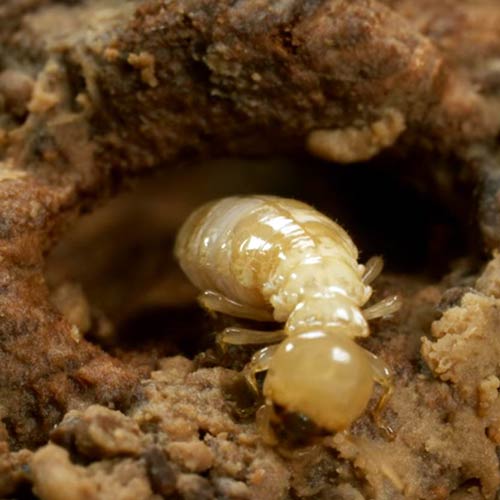
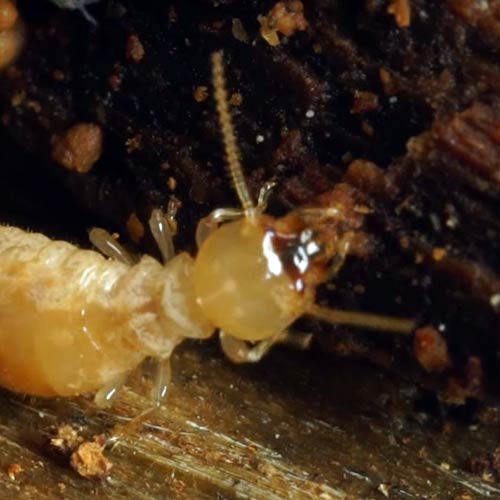
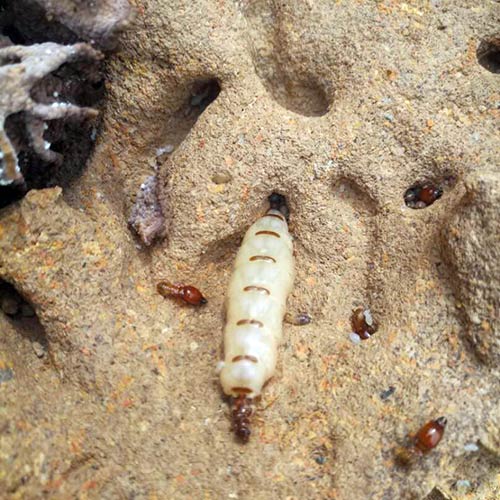
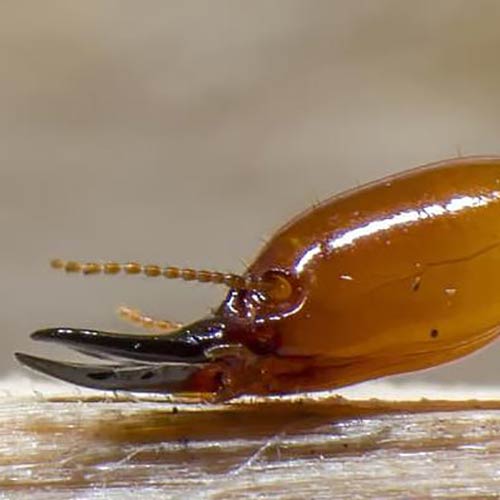
Termites are insects from the Isoptera orders that have a high social life. Termites work in groups known as colonies. In a colony, there are queen, king, workers, soldiers, and termite swarmers. There are several types of termites such as dry wood termite, wet wood termite, mounds termite and termites bearing soil. In Malaysia, species of destructive termite that are commonly found are Captotermes species and other species found are from Macrotermes, Globitermes, Odontotermes, and Schedorhinotermes. Subterranean termites need contact with the soil to survive and live underground. They can build tunnels through cracks in concrete. Subterranean termites are by far the most destructive species. They can collapse a building entirely, meaning possible financial ruin for a homeowner. The hard, saw-toothed jaws of termites work like shears and are able to bite off extremely small fragments of wood, one piece at a time.